At the end of 2024, the first-place candidate in the first round of the presidential elections in Romania, Călin Georgescu, was simply removed from the elections by a single easy move of the EU. Slovak Prime Minister Robert Fico lost his majority in parliament on November 3, 2026. In 2026, Trump, Netanyahu, Orbán, and Vučić overwhelmingly lost their elections, one after the other. Did all of this happen by accident? Not by any means. The invisible hand of Western global centers of power, the invisible hand of the deep state of Soros and his followers, is bringing down the free leaders of the world’s countries, one by one. Fico is next. Let Milei in Argentina get ready. The terror of left-liberal fascists is emerging in the world. A new weapon/tool for effective election manipulation has appeared – mass digital manipulation through social networks. The tool was used for the first time in 2016, in the US elections. It was used by both Trump and Hillary Clinton. ‘Cambridge Analytica,’ which worked for Trump, was more successful and was a pioneer in applying mass digital manipulation in elections. Since then, this software – program – algorithm has been developed by intelligence services and commercial IT companies, and it is available to anyone who can spend hundreds of millions of euros for that purpose, provided they are politically suitable to the Western deep state. This means goodbye to free democratic elections. The crowning proof – Călin Georgescu was removed from the elections in Romania under charges of digital manipulation. Rest assured that Trump, Netanyahu, Orbán, and Vučić lost the elections due to mass digital manipulation through social networks.
In the first round of the presidential elections in Romania, held on November 24, 2024, Călin Georgescu, who was unsuitable for the EU and the Romanian authorities, received the most votes, 23%. Center-right candidate Elena Lasconi from the Save Romania Union alliance won 19%, the same as Marcel Ciolacu, the then-prime minister from the Social Democratic Party, who was considered the favorite ahead of the elections. George Simion (AUR) had 13.87% of the votes, and Nicolae Ciucă (PNL) had 8.79% of the votes. The European Union and the authorities of Romania (an EU member state) panicked. Romania has 19 million inhabitants and borders Ukraine and Moldova. The EU believed that the election of Călin Georgescu as president of Romania would jeopardize the EU’s fight against Russia. The EU, together with the Romanian authorities, agreed to remove Georgescu from the elections. The case of Romanian politician Călin Georgescu represents the most controversial precedent and scandal in the modern history of European elections, where the issue of EU national security, the influence of social networks, digital manipulation, and criminal investigations directly intersected. Following Georgescu’s shocking success in the first round of the presidential elections, the President of Romania published fabricated intelligence service reports that allegedly uncovered a mass, coordinated digital manipulation operation on networks. Allegedly, an abuse of the algorithm was determined. Allegedly, over 25,000 previously inactive profiles on TikTok suddenly started massively sharing and popularizing Georgescu’s content. Allegedly, paid influence and bots were identified. Allegedly, hundreds of influencers were used to artificially push Georgescu’s videos into the users’ ‘For You’ section through coordinated hashtags. Participation in Russian hybrid operations and secret financing was suspected. All of these were accusations by the EU and Romanian authorities against Călin Georgescu. In December 2024, the Constitutional Court of Romania made a ‘historic’ decision and completely annulled the results of the first round of elections, ordering the entire electoral process to be repeated from scratch. The European Union also launched an investigation into the actions of the TikTok platform based on the Digital Services Act (DSA). To put it simply – the elections in Romania were annulled due to alleged digital manipulation. Georgescu was barred from participating in the repeated elections in May 2025, which were won by Nicușor Dan, the former mayor of Bucharest and the EU’s favorite.
I mention all of this because a much larger digital manipulation was carried out in Serbia during the 2026 parliamentary elections, via Facebook (plus Instagram and Threads), X, YouTube, and TikTok. Foreign Western centers of power completely interfered in the political process in Serbia through financing (tens of millions of euros) a massive influence on leading social networks, using advanced algorithms, software, and programs. A multifaceted digital manipulation was executed. The digital manipulation would not have been successful if foreign Western centers of power had not paid tens of millions of euros over two years (2025 and 2026) for an extremely intensified media demonization and dehumanization of Vučić and the SNS. The digital manipulation would not have been successful if foreign Western centers of power had not paid hundreds of millions of euros over two years (2025 and 2026) to instigate and pump up a bloody color revolution, which represented an attempt to violently overthrow Vučić and the SNS. The violent overthrow of Vučić failed, but the intention of foreign Western centers of power to polarize Serbian society, artificially create a ‘referendum atmosphere,’ and mobilize the electorate in favor of the fake Student List succeeded. The ultimate goal of all this was to raise the turnout of voters potentially sympathetic to the fake Student List. This population consists of young people who did not vote in the 2023 elections and those who turned 18 over the course of three years. Foreign Western centers of power succeeded in their intention thanks to media and digital manipulation in favor of the fake Student List. They raised the turnout by a massive 11 percent (turnout in 2026 was 69%) compared to 2023 (58%). In 2023, 3.8 million citizens voted, while in 2026, 4.4 million citizens voted – 600,000 more citizens – predominantly young people. The difference between the SNS-Vučić list and the fake Student List is exactly those 600,000 votes. The key words are – polarization, referendum atmosphere, mobilization, and raising turnout.
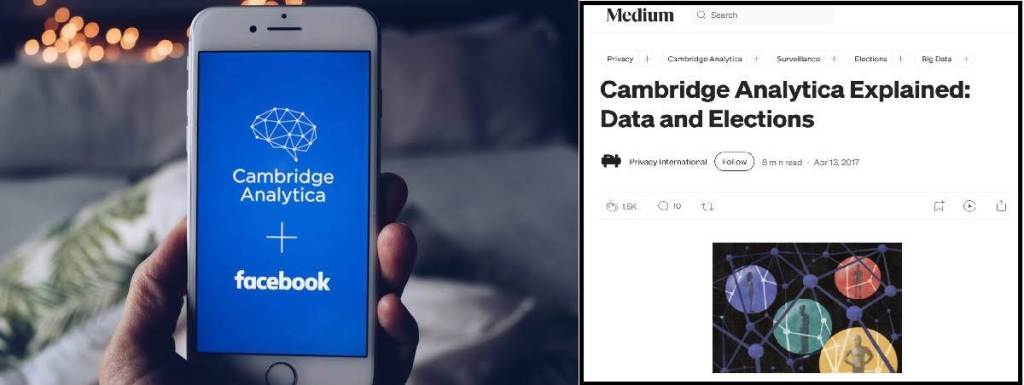
I have said that a multifaceted mass digital manipulation was carried out. First, the Western funders of the fake Student List directly influenced the visibility of candidates – ‘shadowing’ and ‘stifling’ hundreds of thousands of accounts of people who preferred Vučić and the SNS. Tens of millions of euros were paid for this. Second, they artificially ‘pumped up’ the reach and visibility of the fake Student List. Tens of millions of euros were paid for this as well. Third, they used an advanced algorithm, software, and program similar to the one used by the defunct company ‘Cambridge Analytica’ in 2016 (the company was shut down in 2018). And tens of millions of euros were paid for that too. ‘Cambridge Analytica’ is a consulting company that collected Facebook user data for targeted political advertising during the 2016 US elections. Donald Trump’s 2016 presidential campaign was also a client of that company. ‘Cambridge Analytica’ was accused of using illegally collected data from 87 million Facebook users to influence the political views of users (potential voters) and raise their voter turnout through psychological profiling and micro-targeting via ads, messages, commercials, etc. In this way, data from about 87 million Facebook profiles in the US was collected, and then the data was sold to ‘Cambridge Analytica.’ Steve Bannon was the head of Trump’s campaign at the time. Prior to that, Bannon was the vice president of Cambridge Analytica. Officially, the 2016 Trump campaign paid $5.9 million to Cambridge Analytica. Unofficially, much more under the table. It was determined that ‘Cambridge Analytica’ provided the algorithm and a sophisticated software program tool to Trump’s headquarters and campaign in 2016, which was used to micro-target millions of Facebook users with messages, ads, questionnaires, quizzes, and commercials. Some – assessed as sympathetic to Trump – were encouraged to prefer Trump even more and to go out and vote. Those who were undecided were targeted to switch to Trump’s side. The third group, assessed as Trump’s opponents, were targeted to become discouraged and demotivated from voting. I should note that before shutting down, ‘Cambridge Analytica’ either sold its ‘know-how’ (knowledge and skills), i.e., its software-algorithm-program, or intelligence services simply copied, seized, or stole its ‘know-how’ because it is a powerful and effective tool for shaping political views and influencing elections. They said – it’s a shame to let it go to waste. Today, 10 years later, such a tool for political manipulation on social networks has certainly been significantly upgraded and is owned by many private companies in the world. At least one company in Serbia possesses such a tool. Such a tool can be deployed against the ‘disobedient’ or ‘unsuitable’ authorities of a country during elections.
When we speak of the harmful impact on youth regarding elections, we are talking about the fact that young people are naturally highly susceptible to thoughtlessness, recklessness, and impulsivity, including in terms of political preferences—especially if something is beautifully packaged and presented to them. The toxic nature of social networks has greatly contributed to this. In the case of Serbia, young people were presented and offered an ‘irresistible’ Student List, allegedly a list of students. Once planted, the virus grew into a monstrous weed, and the key fact that there are no young people or students on the ‘Student List’ became marginal. The following facts testify that the influence of social networks is immense, especially on the youth. Many Western countries have correctly concluded that it is necessary to protect minors from the harmful impact of social networks. Australia was the first to do so. The Australian law represents the strictest and most important model in the world when it comes to banning social networks for minors. At the end of 2024, the Australian Parliament passed a historic law called the Online Safety Amendment (Social Media Minimum Age) Act. Children under the age of 16 are completely banned from creating and owning accounts on social networks. The banned platforms in Australia are: TikTok, Instagram, Facebook, Snapchat, X (Twitter), YouTube, Reddit, Threads, Twitch, and Kick. The Australian model is good and specific because it does not punish children or parents; instead, all responsibility is shifted to the companies (such as Meta, etc.). If social networks are harmful to minors under 16, they certainly do not have a beneficial effect on young adults, or people in general. Through what I have stated, I have clearly established that the entire world recognizes the harmfulness of social networks, especially in relation to youth. The next fact is that the company Meta (owner of Facebook, Instagram, WhatsApp, and Threads) has been particularly hit by lawsuits from 48 US states that initiated legal proceedings against it due to the harmful impact of social networks on children. Other companies that own social networks, including YouTube and TikTok, are also facing thousands of lawsuits from US states, school districts, and individuals. In August 2026, Meta reached a settlement with 48 US states and territories that had launched lawsuits against it over the harmful impact of social networks on children—which will cost Meta an astonishing 18 billion dollars. The lawsuits claim that Meta’s platforms were deliberately designed to retain young people for as long as possible, and that their products contributed to depression, anxiety, body image issues, and a broader mental health crisis among youth. Meta was also accused of unlawfully collecting and using data on children and failing to protect young users from sexual exploitation on Instagram, Facebook, and WhatsApp. In a separate case, a court in the state of New Mexico (a state that did not agree to the settlement) ruled on October 21, 2026, that Meta must pay a fantastic 25 billion dollars for misleading Facebook users regarding privacy protection and content moderation. The jury determined that Meta violated consumer protection laws more than 43 million times.
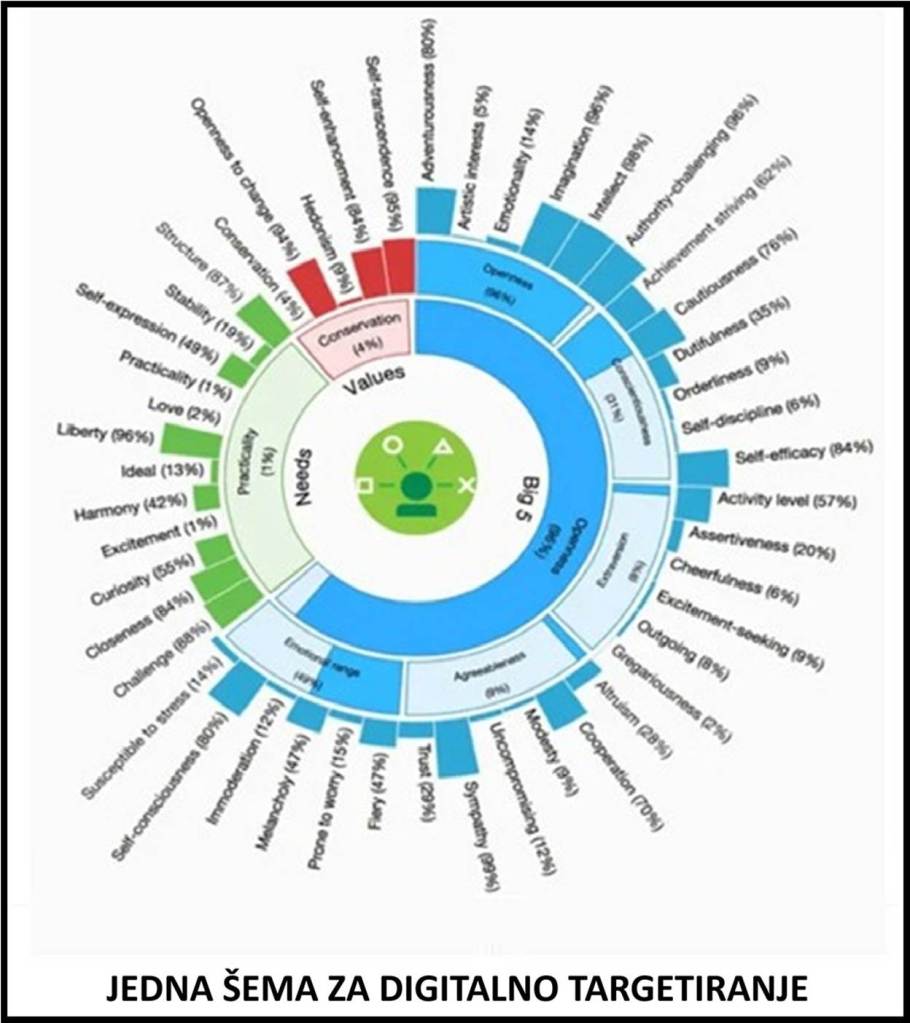
All three described methods of digital manipulation (the ‘stifling’ of some, the ‘pumping up’ of others, and the ‘Cambridge Analytica’ method) were utilized during the campaign in Serbia in favor of the fake Student List. All social networks constantly offer you plans to increase the reach of your personal posts and the posts of major clients. The catch is that they require you to pay for it. Attached, I provide a screenshot of an offer that the ‘X’ platform constantly presents to me. Imagine a client of Facebook, Instagram, Threads, X, YouTube, and TikTok who has the money to invest tens of millions of euros in boosting visibility and additionally targeting hundreds of thousands of profiles they are interested in. In Romania—as Romanian authorities and the EU claim—there was digital manipulation involving 25,000 profiles on TikTok. In Serbia in 2026, the scale of digital manipulation is 20 times larger than in Romania. I repeat, Romania has 19 million inhabitants, while Serbia has three times less – 6.4 million inhabitants. To repeat this as well, the result of presidential candidate Călin Georgescu was annulled due to the digital manipulation of 25,000 profiles on TikTok. If Romania and the EU annulled the first round of the presidential elections in Romania back then, now in Serbia we have much more ground to annul the results of the parliamentary elections, because the level of digital manipulation in Serbia is twenty times higher than in Romania, which has 3 times more inhabitants than Serbia. Therefore, the level of digital manipulation in Serbia is 60 times higher than in Romania. Of course, the matter is settled and no one will demand the annulment of the elections. Neither am I whining over an electoral defeat, nor is what I am writing science fiction. What I am writing in this text is the truth. The difference between Romania and Serbia lies in the fact that the winning candidate Georgescu was not to the liking of either the European Union or the Romanian authorities, whereas the winning fake Student List is to the liking of the European Union. Because of this, there will be no annulment of the elections in Serbia, and demanding that is pure utopia and a Sisyphean struggle. Quite clearly, it does not cross the minds of the Serbian Progressive Party and Vučić to demand this. As a reminder, Vučić and the SNS were the very first to concede the defeat of the SNS and the victory of the fake Student List as early as 9:30 PM. However, that does not mean the truth is not exactly as I describe it.
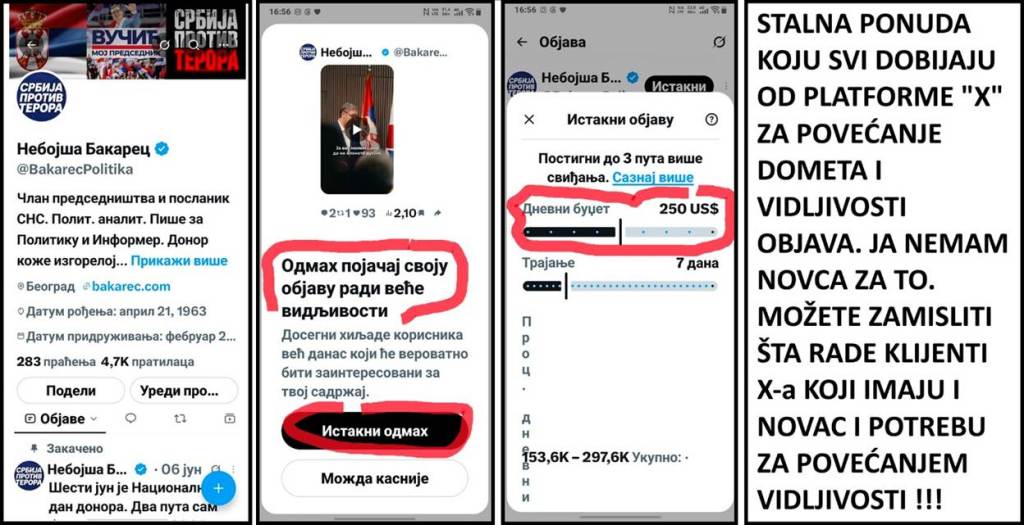
The companies that influenced the elections in Serbia used an algorithm – software – program similar to the one used by Cambridge Analytica. They utilized methods commonly applied by companies (such as retailers) via social networks – psychological profiling of individuals, collecting data on them, and using these profiles and data to personalize messages. In this case, to personalize political messages. Cambridge Analytica once went a step further. First, it obtained data on 87 million Facebook user profiles with Facebook’s consent. That was 10 years ago. In the meantime, this algorithm – software – program has been developed to the point where the consent of any social network is no longer required (you just need to pay them). Other companies have also long possessed tools that enable psychometric predictions. IBM offered a tool that infers personality traits from unstructured text (such as tweets, emails, your blog). The startup Crystal Knows gave clients access to personality reports of their contacts from Google or social networks and offered real-time suggestions on how to personalize emails or messages. In the case of Serbia, researchers from such companies predicted individuals’ political preferences based on social media data (Facebook, X, Instagram, Threads, YouTube, TikTok, etc.) – photographs, profiles, texts, and metric data from phones. The companies that interfered in the Serbian elections focused on raising voter turnout among young people and, for an even easier task, pushing those young people to vote for the fake Student List. In the West, in the US and the UK, in 2016 and later, left-liberal opponents of Trump and Brexit overwhelmingly condemned this type of political profiling and targeting via social networks, labeling it a dangerous threat to democracy. They said: ‘When companies know you are depressed or feeling lonely in order to sell you products you wouldn’t otherwise want, political campaigns and lobbyists around the world can do the same: target the vulnerable and manipulate the masses.’ Someone will ask if this is even legal in Serbia? The answer is – it is a gray zone outside of regulation. However, in November 2024, the EU and Romania assessed election digital manipulation as impermissible and unlawful.
There is one indication that suggests which IT company in Serbia might have worked for the SL and used this tool – weapon to influence the elections (increasing turnout and boosting sympathy for the fake Student List). During election night, the headquarters of the fake Student List was located at 7 Milutina Milankovića Boulevard, in the modern GTC X office building in New Belgrade. One of the 5 companies operating in this building is a well-known domestic and global IT company engaged in the development of technological solutions and software engineering. It is a global company for software development, digital products, and technology consulting, founded in 2008 in Belgrade. However, the two founders of that company did not sign the letter of support from 190 businesspeople for the SL. The ‘Student List’ association (founded by ‘Students in Blockade’) is registered at the official address 6/19 Mihajla Pupina Boulevard, New Belgrade, in the Ušće Business Center. However, the SL headquarters was not there, but at 7 Milutina Milankovića Boulevard. The question arises – why? The fake Student List was a client of an IT company or a group of companies that used the described tool modeled after Cambridge Analytica, which carried out social media manipulation in favor of the fake Student List. The fake Student List was not a direct, but an indirect client, so it did not pay for anything itself. Payments were made abroad by Western funders and patrons of the fake Student List. During 2026, tens of millions of euros were invested in the psychological profiling of individuals, data collection, and using those profiles and data to personalize messages on social networks, and to raise turnout – all in favor of the fake Student List.
It is now clear how and why the major election surprise and shock occurred. The cause of this big surprise is the unexpectedly high youth turnout, which was accompanied by an unjustified and artificially induced referendum hysteria. The turnout in 2026 was 600,000 higher than in 2023. The vast majority of those 600,000 predominantly young citizens voted for the fake Student List. Since January 2025, foreign Western centers of power have invested billions of euros in bringing down Serbia, Vučić, and the SNS. This is the main cause of the fake Student List’s victory. The EU decided to remove Vučić and the SNS from power because they did not impose sanctions on Russia. Since the end of 2022, the EU has been punishing Serbia in various ways. For five years, not a single negotiating cluster has been opened, unjustifiably so, even though Serbia fulfilled all the necessary conditions. The European Union, which decided to remove Vučić and the SNS from power, has 450 million inhabitants and is the second-largest economy in the world. It took such a giant almost 5 years of active efforts to subvert the government in Serbia to finally achieve it. They began doing this from the moment they saw that Serbia would not impose sanctions on Russia. In the last 2 years, foreign Western centers of power, primarily the EU, accelerated the process of bringing down Vučić and the SNS. As they failed to forcefully remove Vučić and the SNS during 2025, they decided to do it using the methods I explained in the previous part of the text. The authorities of small Serbia, which has 6.5 million inhabitants, simply could not do anything against the EU’s intention to enforce its tyrannical will. When an opponent is 100 times larger and stronger than you, it is no longer a fight between David and Goliath. The scale I mentioned would more accurately fit a hypothetical fight between a wolf (35kg) and a Tyrannosaurus (7 tons). Let us also consider the following factors that led to the change of government. The SNS has been in power for 14 years. Most citizens do not delve deeply into the details of politics. Many love change for the sake of change, without considering whether that change is good. People love novelties. Let us recall that the LDP, DJB, Beli Preletačević, and Nestorović undeservedly reaped success when they first appeared. Soon after, they vanished without a trace. The perception of the youth, as well as other opposition voters and those who were undecided, has been completely distorted due to the toxic nature of social networks and even more so due to the monstrous and dehumanizing operations of TV N1, Nova S, and other opposition media that have lasted for over 10 years. Citizens tend to forget quickly—for instance, the terror caused by the blockaders and the fake SL over the course of 2 years, especially in 2025. They quickly forgot the abuse of the tragedy in Novi Sad and the immense violence perpetrated by the opposition, blockaders, and the fake SL. Citizens did not look back at the fact that there are no students on the ‘Student List.’ It is necessary to re-examine and correct all weaknesses within the SNS. To determine mistakes and draw lessons. However, that was not the factor that influenced the defeat of the SNS. The SNS preserved over 98 percent of its votes compared to the 2023 elections. It is necessary to preserve the strength and unity of the SNS. The Serbian Progressive Party is the only registered Serbian political party in parliament. The Serbian Progressive Party is convincingly the largest and strongest political party in Serbia. All other parties are extra-parliamentary and in a state of collapse. The SNS is the sole beacon and bulwark of party democracy. The election results have shown that Aleksandar Vučić and the SNS have preserved democracy in Serbia. Were it not so, the fake Student List would never have come to power.
The author is a Member of Serbian Parliament and a member of the Presidency of the Serbian progressive party

